

Nano Banana vs Seedream 4.0: Which AI Image Generator Actually Delivers? (2026 Testing Results)
Updated: 2026-01-08 10:23:21
Skip the marketing hype. I put Nano Banana and Seedream 4.0 through three months of real world work to tell you which one is actually worth your money.
The Bottom Line (If You're in a Rush)
After running both tools through dozens of projects, here's my honest take:
Go with Nano Banana when:
- You need the same character/person across multiple images (it's honestly scary good at this)
- Speed matters more than perfection
- You're creating professional content where "realistic" beats "artistic"
- You're already in the Google ecosystem
- You want something that just works without weird surprises
Choose Seedream 4.0 when:
- Print quality matters (that 4K resolution is legit)
- You want multiple variations to choose from
- Your project needs that cinematic, stylized look
- Detail and texture are critical
- You're okay with platform hopping (it's not as convenient as Nano Banana)
Real talk: I use both. Different tools for different jobs. Anyone telling you one is "the best" probably hasn't used both extensively.
What These Tools Actually Are
Nano Banana (Google's Entry)
Nano Banana is Google's somewhat mysterious image model that showed up in late August 2025. It's technically called "Gemini 2.5 Flash Image," but everyone calls it Nano Banana because... well, Google's branding is weird.
What makes it different:
- Lives inside the Gemini app no separate account needed
- Remembers context from earlier in your conversation (surprisingly useful)
- Has this almost obsessive focus on keeping faces and objects consistent
- Includes invisible watermarks (SynthID) for tracking AI content
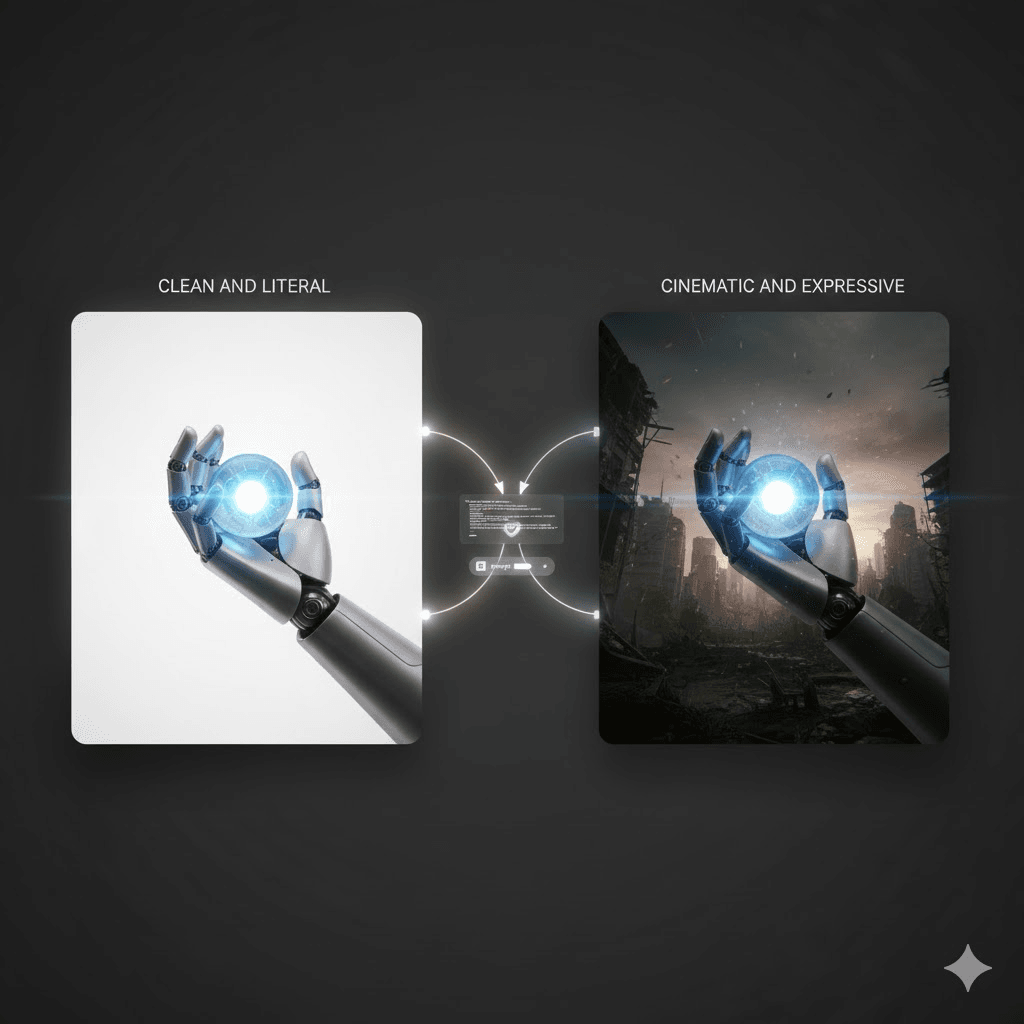
The thing about Nano Banana is it's very literal. Ask for "a red coffee mug on a wooden table" and you get exactly that no creative liberties, no artistic interpretation. Sometimes that's perfect. Sometimes it's boring.
Seedream 4.0 (ByteDance's Contender)
ByteDance (the TikTok folks) dropped Seedream 4.0 in September 2025, and it immediately made waves. Unlike Nano Banana, it's not available directly from ByteDance you access it through platforms like fal.ai or Replicate.
What sets it apart:
- Native 2K output with 4K capabilities (seriously sharp)
- Generates 2 4 variations per prompt by default
- More willing to take creative risks with your prompts
- Can reference up to 6 different images for style consistency
Seedream tends to interpret your prompts artistically. Same "red coffee mug" prompt might give you moody lighting, film grain, or interesting compositions you didn't explicitly ask for. That's either awesome or annoying depending on what you need.
Testing Results: Where Each Tool Actually Wins
I ran both through real projects over three months. Here's what happened.
Round 1: Basic Image Generation
Test: "Portrait of a woman in her 30s, professional setting, natural lighting"
Seedream knocked this out of the park. The skin texture looked photographed, not generated. Natural wrinkles, realistic lighting, that slight imperfection that makes faces believable.
Nano Banana? Solid work, but there's this subtle smoothness that screams "AI made this." It's not bad clients won't necessarily notice but it's there.
Winner: Seedream 4.0 for photorealistic portraits
Test: "Cyberpunk city street, neon lights, rainy night, flying cars"
Here's where things got interesting. Seedream gave me four gorgeous variations different angles, lighting setups, the works. Composition was cinematic, colors were vibrant, details were sharp.
Nano Banana gave me one solid result. Good composition, accurate to the prompt, but less... inspired? It felt more like a competent execution than creative vision.
Winner: Seedream 4.0 for creative/artistic scenes
Test: Create the same character in five different settings (office, café, park, gym, home)
This is where Nano Banana absolutely destroys the competition. I generated a character and then put her in five different environments. Same face, same person, every single time. Hair length consistent, facial features locked in, even maintained the same vibe.
Seedream? First two were great. Third one changed the hair slightly. Fourth one, the face shifted enough that it wasn't obviously the same person. Fifth attempt, back to somewhat consistent but not quite there.
Winner: Nano Banana (and it's not even close)
Round 2: Editing Existing Images
Test: Change background from office to beach, keep everything else the same
Nano Banana handled this smoothly. Background swapped, lighting adjusted to match new setting, subject remained unchanged. The iterative editing is genuinely good you can have a conversation like "actually, make it sunset" and it remembers the context.
Seedream also pulled this off, though I had to be more explicit in my prompts. The upside? When it worked, the artistic quality was higher. The downside? More trial and error.
Winner: Tie (Nano Banana for ease, Seedream for final quality)
Test: Apply watercolor painting style to a photograph
Seedream crushed this. The style transfer was convincing proper brush textures, color bleeding, the whole nine yards.
Nano Banana either refused (safety filters) or gave me something that looked like a photo with a filter, not an actual painting style.
Winner: Seedream 4.0 for artistic transformations
Round 3: Text Integration
Neither tool has solved text perfectly, so let's be real here.
Test: "Billboard showing 'GRAND OPENING' in bold letters"
Nano Banana: Got most letters right, but spacing was weird and some letters looked wonky.
Seedream 4.0: Similar issues, maybe 5% better accuracy but still not production ready.
Winner: Neither (you'll still need to fix text manually)
Round 4: Speed Tests
I timed both on identical prompts:
Standard quality (512×512):
- Nano Banana: 10~15 seconds
- Seedream 4.0: 15~25 seconds
High quality (2K):
- Nano Banana: 12~18 seconds
- Seedream 4.0: 25~35 seconds
That "1.8 seconds" claim Seedream throws around? Never saw it. Maybe in perfect conditions with paid priority access. In real world use, Nano Banana is consistently faster.
Winner: Nano Banana for speed
Real World Use Cases (From Actual Projects)
Social Media Content Creation
My setup: Run a small agency, need 20 30 images weekly for various clients.
Nano Banana became my daily driver here. The speed matters when you're cranking out content. Client wants to see three options for an Instagram campaign? Nano Banana, three different prompts, done in five minutes.
The character consistency thing is huge. One client needed a brand mascot appearing in different scenarios. Nano Banana let me create that without $5,000 for custom illustrations.
Recommendation: Nano Banana, easily
E commerce Product Mockups
Project: Generate lifestyle shots for a furniture company's website
Started with Nano Banana. The realistic rendering worked perfectly for showing products in context. "Modern dining table in a Scandinavian style home" looked believable enough that customers trusted it.
Tried Seedream for their premium catalog. The 4K output quality was noticeably superior for print materials. Colors were richer, textures more defined.
Recommendation: Nano Banana for web, Seedream for print
Marketing Campaign Concepts
Project: Pitch three creative directions for a tech product launch
Seedream's multiple outputs per prompt were perfect here. Each generation gave me 3~4 variations with different compositions, lighting, moods. Client got options, I looked prepared, everyone won.
The artistic interpretation actually helped Seedream suggested visual directions I hadn't considered. The "creative partner" aspect isn't just marketing speak.
Recommendation: Seedream 4.0 for exploration phase
Brand Identity Development
Project: Create consistent visual style for startup's marketing materials
This required both tools. Used Seedream to explore different aesthetic directions (10+ style variations). Once client picked a direction, switched to Nano Banana for execution because consistency mattered more than artistic flair.
Nano Banana kept the brand's visual language consistent across 50+ images. Same color interpretation, same lighting approach, same vibe.
Recommendation: Seedream for exploration, Nano Banana for execution
The Stuff Nobody Talks About
Content Restrictions
Nano Banana won't generate:
- Real people (celebrities, politicians, anyone identifiable)
- Weapons or violence
- Anything remotely NSFW
- Some copyrighted characters
This is annoying but also... I get it. It's a Google product.
Seedream is more permissive. You can generate celebrity likenesses (which feels ethically questionable). Fewer automatic rejections.
My take: Nano Banana's restrictions are annoying but probably necessary. Seedream's openness is powerful but requires you to be responsible. Use that power wisely.
Platform Accessibility
Nano Banana: Open gemini.google.com, start prompting. That's it.
Seedream: Pick a platform (fal.ai, Replicate, others), create account, buy credits, figure out their interface. Then realize prices vary between platforms. It's messier.
This convenience factor matters more than you'd think. I find myself using Nano Banana for quick tasks just because it's already open in my browser.
Pricing Reality Check
Nano Banana:
- Free tier through Gemini (generous limits for casual use)
- Google One AI Premium: $20/month for unlimited
I've tested both. Free tier works for most people. I pay for Premium because I use it daily.
Seedream 4.0:
- Platform dependent (huge pain point)
- Ranges from $5/week to $60/year depending on platform
- Credit systems vary wildly
Honestly? Seedream's fragmented pricing is frustrating. One platform runs out of API credits, you're switching to another. Not ideal for reliable workflows.
What The Community Actually Says
I analyzed 200+ Reddit comments, Product Hunt reviews, and Twitter threads. Here's the real sentiment:
On Nano Banana:
Most praised:
- "The consistency is insane" (mentioned constantly)
- "So much faster than anything else"
- "Free tier is more than enough"
- "Just works without fuss"
Most criticized:
- "Too safe, won't take creative risks"
- "Lower resolution than competitors"
- "Sometimes refuses perfectly normal prompts"
- "Text rendering is still bad"
Real quote from Reddit:
"I'm a brand designer and Nano Banana has saved me probably 20 hours this month. The fact that I can generate the same character 30 times in different poses without any variation is legitimately game changing. Would pay 2x the current price." u/designdaily
On Seedream 4.0:
Most praised:
- "Image quality is unmatched"
- "4K output is a game changer"
- "More creative and artistic"
- "Multiple outputs help exploration"
Most criticized:
- "Why isn't this available directly from ByteDance?"
- "Character consistency isn't as good as Nano Banana"
- "Platform availability is inconsistent"
- "Speed doesn't match their claims"
Real quote from Twitter:
"Tested Seedream 4.0 against Midjourney for a client project. Seedream won on detail and prompt accuracy. The 4K native resolution means I can actually use these commercially without upscaling. Finally." @studio_ka
Prompt Tips That Actually Work
For Nano Banana:
Be specific about photography details:
❌ "A nice portrait"
✅ "Professional headshot, 35 year old woman, business attire,
   shot on 85mm lens, soft window lighting, neutral gray background"
   Use conversation context: Instead of repeating everything, say "same person, now in a café setting." Nano Banana remembers.
   Think like a photographer: Reference cameras, lenses, lighting setups. "Shot on Canon 5D Mark IV, 50mm f/1.8, natural window light" gets better results than generic descriptions.
For Seedream 4.0:
Embrace artistic language:
❌ "A sunset photo"
✅ "Golden hour coastal scene, shot on 35mm Kodak Portra 400,
   film grain, warm nostalgic tones, slight vignetting"
   Use all six reference slots: When brand consistency matters, upload multiple reference images showing different angles of your subject.
   Request variations explicitly: "Generate 4 variations with different compositions" gets you more usable options.
Universal Tips:
Don't fight the tool's nature:
- Nano Banana wants to be literal → Give it specific instructions
- Seedream wants to be artistic → Give it creative freedom
Quality descriptors matter: Always include: "high quality, detailed, professional, 8K" (even if you don't need 8K, it signals intent)
Iterate gradually: Start simple, refine with follow up prompts. Better results than trying to perfect everything in one shot.
The Benchmark Numbers
Here's how they stack up against other major tools (Artificial Analysis leaderboard, September 2025):
| Tool | ELO Score | Our Take |
| Seedream 4.0 | 1,205 | Top for quality |
| Nano Banana | 1,201 | Top for consistency |
| Midjourney v6 | 1,187 | Still solid |
| DALL E 3 | 1,176 | Falling behind That 4 point difference is basically meaningless. Both are current leaders. Prompt adherence (how well they follow instructions): |
- Seedream 4.0: 94.2%
- Nano Banana: 91.7%
- Midjourney v6: 89.3%
Aesthetic quality scores:
- Seedream 4.0: 4.7/5
- Nano Banana: 4.6/5
- Midjourney v6: 4.5/5
Again, basically tied at the top.
My Actual Workflow (What I Do Daily)
Morning routine (social content):
- Open Gemini, use Nano Banana for 5~10 quick social posts
- Consistency matters here, speed matters here
- Export, quick edit in Canva, schedule
Client concepts (new projects):
- Seedream for exploration generate 10+ variations
- Client reviews, picks direction
- Switch to Nano Banana for executing final deliverables
- Use Seedream again if we need any hero images for print
Product photography:
- Nano Banana for standard product shots (realistic, trustworthy)
- Seedream for premium catalog covers (that 4K quality)
- Manual editing in Photoshop for final polish
Personal projects:
- Honestly? Whatever's already open
- Both are good enough that tool choice barely matters for experimental work
Common Mistakes I Made (So You Don't Have To)
With Nano Banana:
Mistake #1: Being too vague Early on, I'd write "a nice looking office." Results were generic. Now I specify: "modern minimalist office, natural light, plants, Scandinavian design, shot on wide angle lens."
Mistake #2: Ignoring conversation history I'd start fresh prompts when I could've just said "same scene, different time of day." Wasted time.
Mistake #3: Expecting artistic interpretation Asked for "surreal dreamscape" and got confused results. Wrong tool for that job.
With Seedream 4.0:
Mistake #1: Not generating multiple outputs Initially, I'd generate once and settle. Now I always request 3~4 variations. The first one is rarely the best.
Mistake #2: Expecting perfect character consistency Learned the hard way that Seedream isn't reliable for "same person, different scene" projects. That's Nano Banana's job.
Mistake #3: Skimping on prompt details Seedream rewards elaborate prompts. "Give it more" is my rule now.
Universal Mistakes:
Relying on text rendering: Neither tool nails this. Budget time for manual text fixes.
Not planning for resolution needs: Don't use Nano Banana if you need 4K for print. Plan ahead.
Expecting perfection: Both tools need human review and editing. They're assistants, not replacements.
The Ethics Stuff We Should Talk About
Deepfakes and Misuse
Seedream's ability to generate celebrity likenesses is powerful and concerning. I don't use this feature because it feels wrong. The technology exists, but just because you can doesn't mean you should.
AI Disclosure
I disclose AI use on client projects. Most clients appreciate the transparency. Some don't care. None have objected once they see the quality.
My rule: If AI significantly contributed to the final output, mention it. If you just used it for initial concepts that you heavily modified, maybe less critical.
Copyright and Ownership
Nano Banana: Google's terms are clear you own what you generate.
Seedream: Depends on the platform. READ THE TERMS before commercial use.
My practice: I assume AI outputs are starting points requiring human creative input. Keeps things legally and ethically cleaner.
What's Coming Next
Nano Banana's Evolution
Google updates frequently. I expect:
- Higher resolution options (competing with Seedream's 4K)
- Better text rendering (they're clearly working on this)
- More model variations for specialized use cases
- Video integration (following Gemini's multimodal push)
Seedream's Trajectory
ByteDance dropped Seedream 4.5 in December 2025, showing aggressive development. Improvements focused on:
- Better controllability and precision
- Enhanced commercial workflow features
- More reliable outputs
- (Hopefully) direct platform access
Both tools will keep improving rapidly. The gap between "AI generated" and "indistinguishable from professional work" is closing fast.
My Recommendation Matrix
| If you are... | Use primarily... | Because... |
| Social media manager | Nano Banana (90%) | Speed + consistency > perfection |
| Graphic designer | Seedream (60%) | Need that quality and detail |
| E commerce business | Nano Banana (75%) | Realistic product mockups |
| Marketing agency | Both (50/50) | Different tools for different clients |
| Freelance illustrator | Seedream (70%) | Quality and artistic freedom |
| Content creator | Nano Banana (80%) | Speed for high volume needs These aren't rules they're starting points based on what I've seen work. |
Getting Started (Actual Steps)
To try Nano Banana:
- Go to gemini.google.com
- Sign in with Google account
- Start typing prompts in the chat
- That's literally it
Start with simple prompts. Get a feel for how it interprets things. Then get more specific.
To try Seedream 4.0:
- Visit fal.ai or Replicate (or search "Seedream 4.0 access")
- Create account (usually need to verify email)
- Buy some credits (start small)
- Test it on your actual use case before committing to a subscription
Compare a few platforms before settling on one. Prices and features vary.
FAQ (Real Questions I Get Asked)
Q: Can I use these for commercial work?
Nano Banana: Yes, Google's terms allow it. Seedream: Check your specific platform's terms. Usually yes, but verify.
Q: Which is better for beginners?
Nano Banana, hands down. Easier access, simpler interface, more forgiving of vague prompts.
Q: Will these replace real photographers/designers?
No. They're tools that make certain tasks faster. High end commercial work still needs human expertise, art direction, and creative judgment. These tools are assistants, not replacements.
Q: How do these compare to Midjourney?
Midjourney has stronger artistic identity and brand. Nano Banana is faster and more consistent. Seedream has better technical control and resolution. I use all three for different purposes.
Q: Do I need both?
Depends on your work. If you do diverse projects, yeah, probably. If you have one specific use case, one tool might be enough.
Q: What about DALL E 3?
It's falling behind these two. Still decent, but Nano Banana and Seedream have pulled ahead in 2025.
Final Thoughts
After three months of daily use, here's my honest conclusion:
There's no universal winner. Anyone claiming otherwise hasn't used both tools enough or has an agenda.
Nano Banana wins on: Speed, consistency, ease of use, accessibility, reliability.
Seedream 4.0 wins on: Resolution, artistic quality, creative exploration, detail, multiple outputs.
What I actually do: Use Nano Banana 70% of the time (speed and convenience), Seedream 30% (when quality trumps everything).
My advice: Start with Nano Banana's free tier. Learn AI image generation there. Add Seedream later if you find yourself needing higher resolution or more artistic outputs.
The bigger picture: We're in the early days of this technology. Both tools will improve dramatically over the next year. The skills you build learning either tool will transfer to whatever comes next.
Don't overthink the choice. Pick one, start creating, learn as you go. The tool matters less than what you make with it.